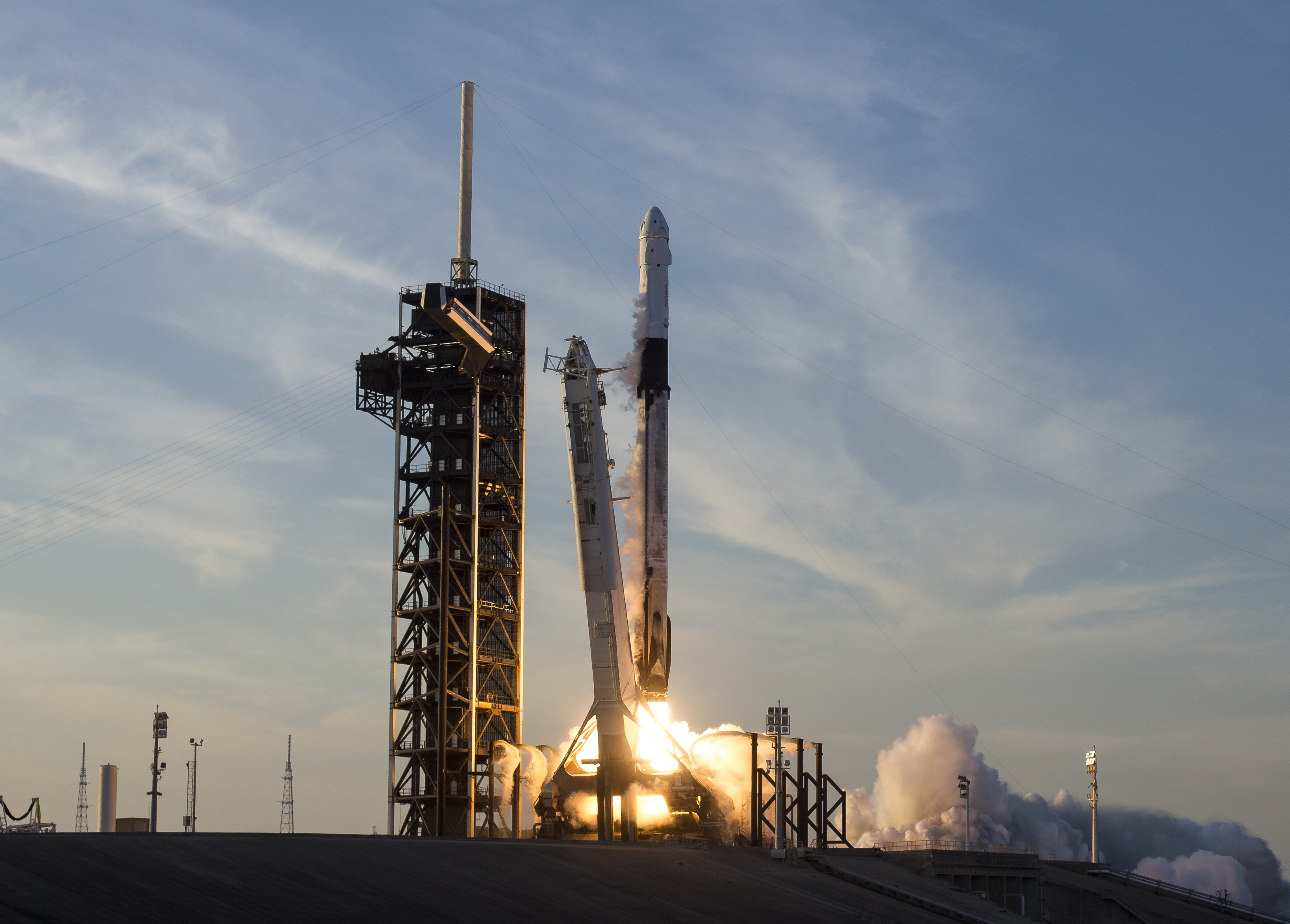
A Falcon 9 Carries a First-of-Its-Kind Servicer to Orbit
On July 21, 2026, a SpaceX Falcon 9 lifted off from Launch Complex 40 at Cape Canaveral Space Force Station in Florida, carrying Mission Robotic Vehicle 1 (MRV-1), a spacecraft developed by Northrop Grumman. Liftoff occurred within a four-hour window that opened at 5:15 p.m. Eastern time. Integrated into the vehicle is the Robotic Servicing of Geosynchronous Satellites (RSGS) payload, a system jointly developed by the U.S. Naval Research Laboratory and DARPA.
The mission is the product of years of public-private cooperation and represents one of the most concrete steps yet toward what engineers increasingly call an orbital servicing economy — an approach that seeks to extend spacecraft lifespans rather than write off aging satellites as lost assets.
Installing Propulsion Pods in the Graveyard Orbit's Backyard
MRV-1's primary objective is to travel to geostationary orbit, roughly 35,800 kilometers above Earth, and install propulsion pods onto three aging commercial satellites. These external modules would restore sufficient maneuvering capability to keep those satellites commercially viable for several additional years, effectively deferring their retirement and reducing the creation of new orbital debris.
The operation demands a level of robotic precision seldom attempted in practice. The satellites targeted were never designed to be serviced, meaning MRV-1 must approach, dock, and attach hardware to structures with no purpose-built interfaces. The robotic arms aboard — derived from the Naval Research Laboratory's RSGS program — were engineered specifically to handle these tasks in what engineers refer to as a non-cooperative environment.
The mission is planned to span more than a decade, placing it among the longest and most complex orbital robotics campaigns ever attempted in the commercial sector.
Strategic Stakes Beyond the Technical Achievement
The MRV-1 launch carries implications that extend well beyond satellite maintenance. For DARPA, the program's institutional backer, the strategic value is clear: demonstrating the ability to approach, inspect, and modify assets in geostationary orbit has obvious relevance for both military space operations and commercial satellite management.
For Northrop Grumman, MRV-1 builds on the company's earlier work with its Mission Extension Vehicle (MEV) series, which successfully docked with Intelsat satellites in geostationary orbit. However, MRV-1 represents a meaningful step forward: where MEV spacecraft attached permanently to a single satellite and provided propulsion directly, MRV-1 is designed to move between multiple clients and leave behind transferable propulsion modules.
This orbital filling station model also raises regulatory questions that remain largely unresolved. Questions of liability in the event of a servicing incident, and the applicability of international space law to third-party interventions on foreign-registered satellites, are among the issues that industry and policymakers will need to address as these missions become routine.
If MRV-1 meets its goals, it could fundamentally alter the expected commercial lifespan of a geostationary satellite — and with it, the economics of high-Earth orbit for years to come.