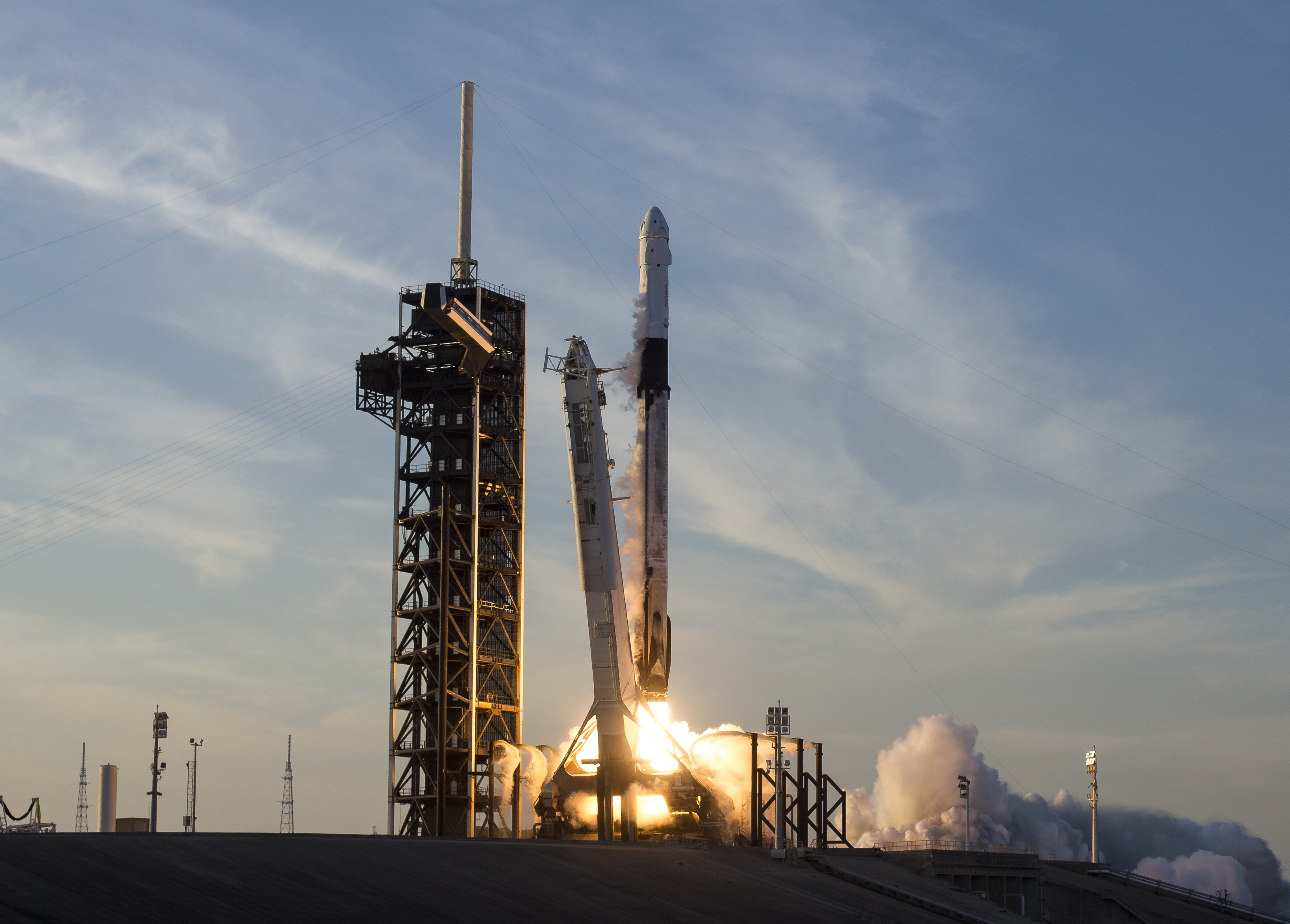
A deeper commitment: NASA adds three Crew Dragon rotations
On September 18, 2026, NASA announced a contract modification awarding SpaceX three more crew transportation missions to the International Space Station. The agreement falls under the Commercial Crew Program, the initiative through which NASA has relied on private operators to ferry astronauts to and from low Earth orbit since 2020.
The decision cements SpaceX's role as NASA's primary orbital taxi service. Crew Dragon has compiled a consistent track record across multiple rotations, maintaining uninterrupted human presence aboard the station. NASA did not disclose the precise schedule for these three additional flights, nor did it reveal the financial terms tied to the contract amendment.
The announcement comes as debates over the ISS's long-term future continue in Washington. The station's deorbit is tentatively planned for around 2030, and sustaining regular crew rotations through that window remains operationally essential, regardless of how broader policy discussions ultimately unfold.
CRS-35: a Falcon 9 aimed at October
Separately, NASA opened media accreditation for the 35th SpaceX commercial resupply mission, conducted under the CRS (Commercial Resupply Services) program. The Falcon 9 launch is targeted for no earlier than October 2026, with a precise liftoff window yet to be confirmed at the time of publication.
The Dragon capsule will carry a mix of NASA science investigations, research hardware, crew provisions, and general station equipment. These resupply runs have become a reliable fixture of ISS logistics, and SpaceX now operates as the sole active CRS provider following the conclusion of Northrop Grumman's Cygnus deliveries, which had run in parallel for several years.
Thirty-five missions into the program, the pace and predictability of these flights stand as a marker of how thoroughly commercial spaceflight has been woven into NASA's day-to-day operations.
ESA recognizes innovation at ESTEC gathering
On the European side of the ledger, the European Space Agency hosted its Industry Space Days 2026 on September 16 at its ESTEC facility in Noordwijk, the Netherlands. Three companies from the European space sector received ESA's annual awards for excellence and innovation during the ceremony.
Full details on the award recipients had not been released at the time this article was prepared, but the event carries consistent significance within the European industrial ecosystem. ESA uses the occasion each year to signal which qualities it values most in its supplier base — technical performance, certainly, but also the capacity to push boundaries in an environment growing more competitive by the month.
The recognition arrives at a delicate moment for European space industry. The transition from Ariane 5 to Ariane 6 introduced operational turbulence, and the sector continues to calibrate its response to the expanding footprint of American and Asian launch providers.
Taken together, this week's developments sketch a familiar yet telling picture: NASA deepening its reliance on commercial partnerships, and ESA working to keep its industrial base sharp. Both institutions are playing long games, and neither appears to be slowing down.


