A milestone buried inside a routine launch
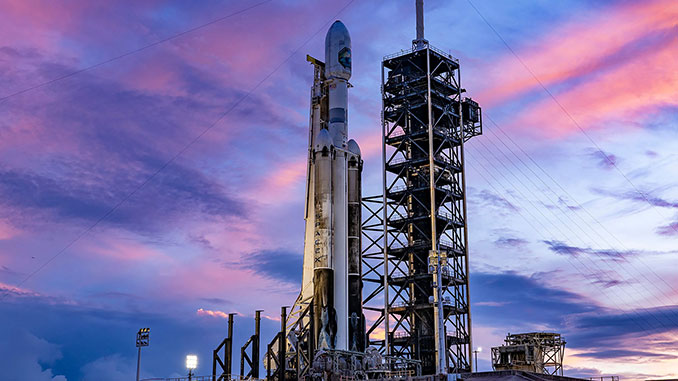
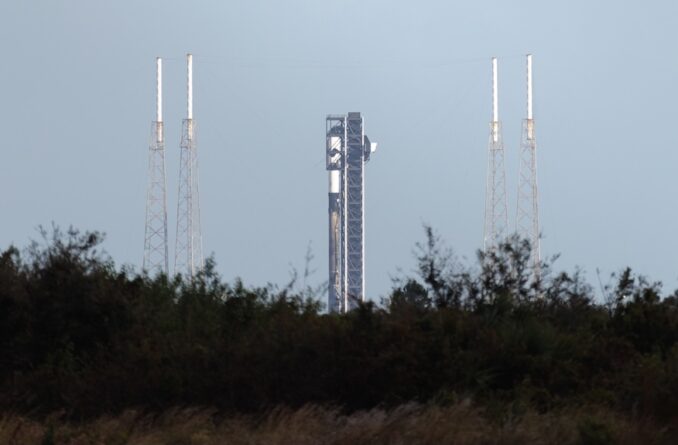
On the morning of August 20, 2026, a Falcon 9 rocket lifted off from Space Launch Complex 40 at Cape Canaveral Space Force Station in Florida at 11:38 a.m. EDT. The mission, designated Starlink 10-39, carried a fresh batch of broadband satellites — including the 2,000th Starlink spacecraft to reach orbit so far in 2026. The number is both a logistical landmark and a signal of how deeply SpaceX has embedded itself in the commercial connectivity market.
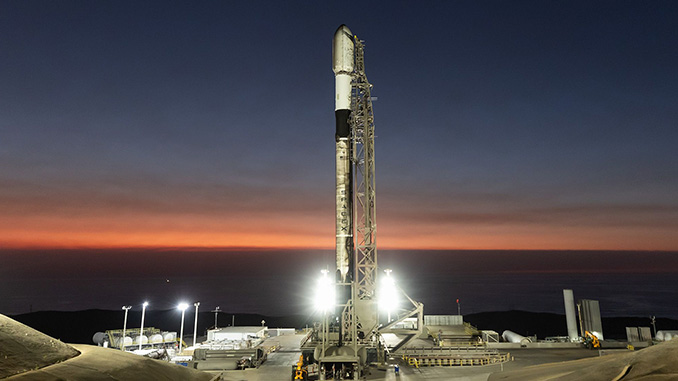
Just two days earlier, on the night of August 18, another Falcon 9 had lifted off from Vandenberg Space Force Base in California. That mission, Starlink 17-50, departed pad 4E at 8:45 p.m. PDT and delivered 24 satellites to a high-inclination orbital shell designed to improve coverage across polar and sub-polar regions. Two launches, two coasts, three days — a sequence that has become almost unremarkable in SpaceX's operational calendar.
The mechanics behind the pace
The August 20 flight was SpaceX's 75th Starlink-dedicated launch of 2026, a figure that works out to roughly ten missions per month sustained across the entire year. Maintaining that tempo requires more than ambition. It depends on dual launch sites operating in near-parallel, a fleet of reusable first-stage boosters capable of rapid turnaround, and two drone ships — one in the Atlantic, one in the Pacific — standing by to recover those boosters after every flight.
The booster assigned to the Starlink 17-50 mission from Vandenberg was recovered at sea in the Pacific following its landing, continuing a cycle of reuse that has become the financial backbone of SpaceX's launch economics. Without reusability at this scale, the unit cost per satellite deployment would make the current cadence economically untenable.
Connectivity gains, orbital tensions
With thousands of satellites already active in low Earth orbit, Starlink now provides broadband internet access to subscribers across dozens of countries. The service has gained particular traction in underserved rural areas, as well as through agreements with airlines, maritime operators, and several national governments seeking resilient communications infrastructure.
That growth does not come without friction. Professional astronomy organizations, including bodies affiliated with the International Astronomical Union, continue to document the interference caused by satellite trails in wide-field telescope observations. SpaceX has rolled out successive generations of anti-reflective coatings to reduce satellite brightness, but the effectiveness of those measures remains a subject of ongoing scientific evaluation, and the broader question of orbital governance — who decides how many satellites can share a given altitude band — has yet to find a durable regulatory answer.
As of late August 2026, reaching 2,000 satellites launched within a single calendar year raises a question worth sitting with: what does the environment of low Earth orbit look like when that number doubles again, and who is positioned to manage the consequences?